How Can Food Help Ease Low Mood and Anxiety? Understanding the Gut-Brain Axis and Key Nutrients
When you're anxious or feeling low and keep reaching for sweets and fried food, it's mostly your body's physical defense response to extreme exhaustion. This letter covers the "gut-brain axis" between your brain and your gut, three groups of key nutrients that help steady your nervous system, and easy ways to eat when you're too tired to make anything.

Contents · 8 sections
In this letter
 In this letter
- Craving cake, sugary drinks, or fried food when you're anxious or feeling low is mostly your body's physical defense response to extreme exhaustion.
- Your brain and digestive tract are constantly sending signals both ways, and about 80% to 90% of the body's serotonin is made in the gut.
- When you're going through a low patch, eat with an "add, don't take away" approach. There's no need to force yourself into strict, flawless dieting.
- When you're too tired to make anything, try a bottle of warm unsweetened soy milk and a hard-boiled egg, or add a bowl of hot miso soup to your usual takeout.
- If today you really can't eat a single bite of healthy food, that's okay.
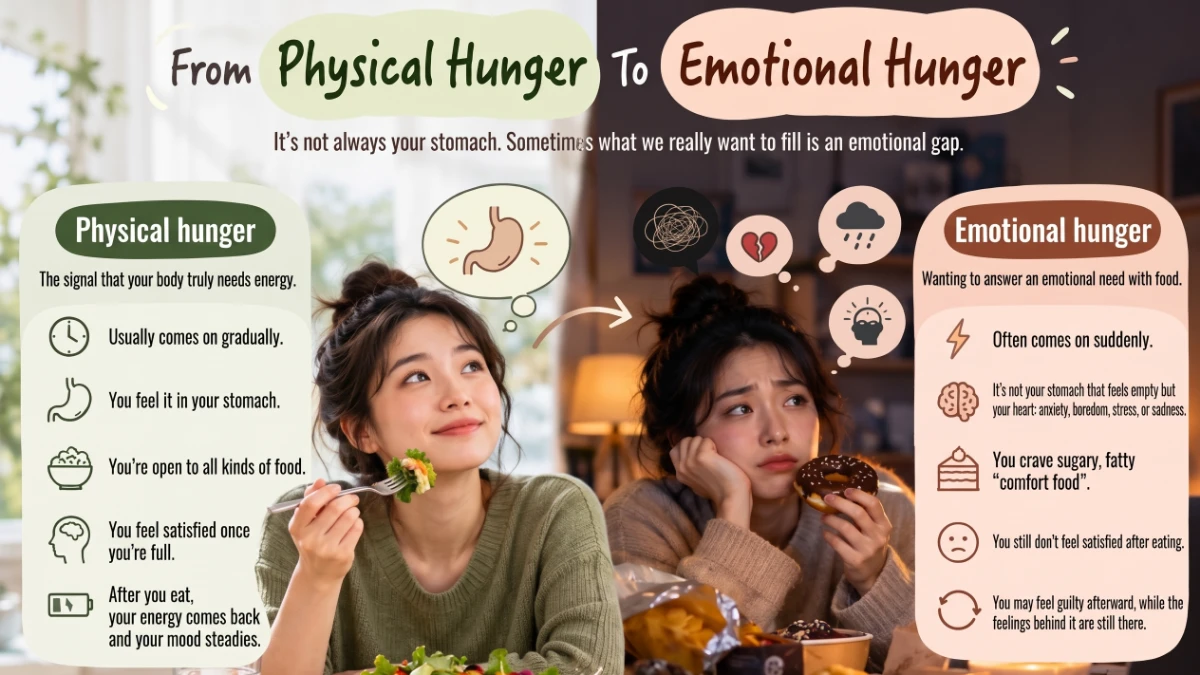
After a long, tense day, you get home and collapse on the couch, often without even the energy to open a delivery app. Whenever they're anxious or feeling low, a lot of people find themselves reaching again and again for cake, sugary drinks, or high-calorie fried food.
And very often, what follows is even deeper self-blame:
"Why do I have so little self-discipline?"
"Why is eating the only way I know how to deal with stress?"
In my nutrition consultations, a lot of clients have this same struggle.
This urge to eat is mostly your body's physical defense response to extreme exhaustion.
When you're under chronic stress or in a long emotional low, levels of the neurotransmitters in your brain that regulate mood, serotonin and dopamine, drop noticeably.
Refined sugar and high-fat foods stimulate the brain's reward system to release dopamine quickly, briefly raising blood sugar and serotonin levels and bringing an immediate sense of comfort.
This craving comes from the way your nervous and endocrine systems regulate themselves.
Even so, when you're in an emotional low, I don't recommend forcing yourself into strict, flawless dieting.
From a clinical nutrition point of view, what really helps steady your body and mind is first understanding the two-way signals between your brain and your gut, and then gradually getting the nutrients you need in ways that don't add to your load.
Getting to know the "gut-brain axis"
When they're stressed or feeling low, many people also have digestive symptoms: acid reflux, frequent bloating and stomach pain, and for some, diarrhea or constipation.
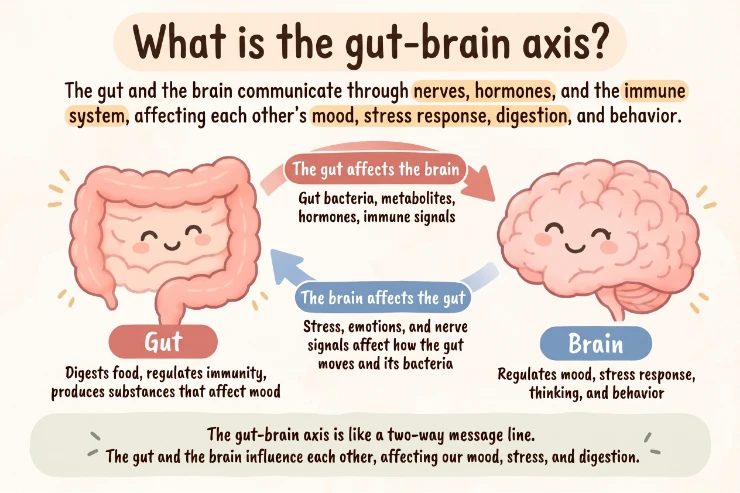
This reflects how what medicine calls the "gut-brain axis" works.
Your brain and digestive tract keep sending signals back and forth through the vagus nerve, hormones, and the immune system:
- The gut is where most serotonin is made: About 80% to 90% of the body's serotonin is produced by enterochromaffin cells in the gut, and it's strongly shaped by what gut bacteria produce.
- An imbalance in gut bacteria leads to inflammation: When the gut lining's barrier is damaged and the share of good bacteria falls, the inflammatory factors that result travel through the bloodstream and affect the central nervous system, making you more tired and less able to focus.
- The autonomic nervous system and the gut throw each other off: Stress activates the sympathetic nervous system and holds back the parasympathetic, which reduces digestive secretions and disrupts the normal contractions of the gut's smooth muscle. The bloating and discomfort of poor digestion then keep sending stress signals to the central nervous system, disrupting deep sleep at night and leaving you even lower in energy and mood during the day.
If you want to feel better emotionally, keeping your digestive system working steadily is a physical foundation you can't overlook.
Steadying your nervous system: three groups of key nutrients for low times
When you're going through a low patch, plan your meals around an "add, don't take away" approach, and choose natural foods that help keep your nerve signaling balanced and your gut healthy first.
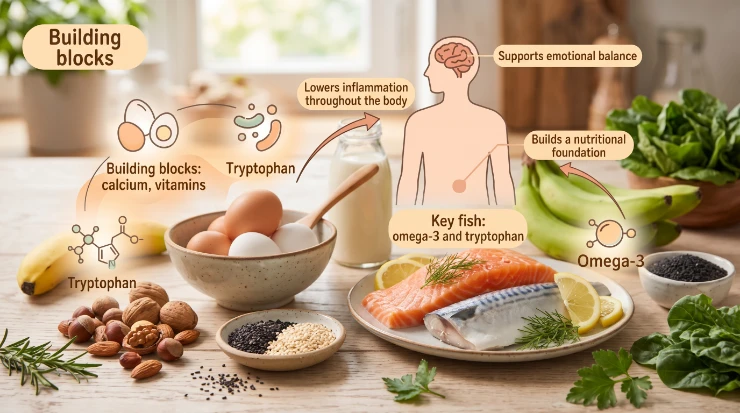
1. Building blocks: essentials for making serotonin and fighting inflammation
- Key nutrients: Tryptophan, omega-3 polyunsaturated fatty acids.
- Foods to try: Unsweetened soy milk, eggs, salmon, mackerel, shellfish.
- How it works: Tryptophan is an essential amino acid the body can't make on its own, and it's a key building block the body uses to make serotonin. The EPA and DHA in fatty fish have clear anti-inflammatory effects, and recent clinical meta-analyses suggest that getting enough omega-3 fatty acids can help improve nerve signaling and ease low mood and anxiety.
2. The foundation: fermented foods that keep your gut ecosystem balanced
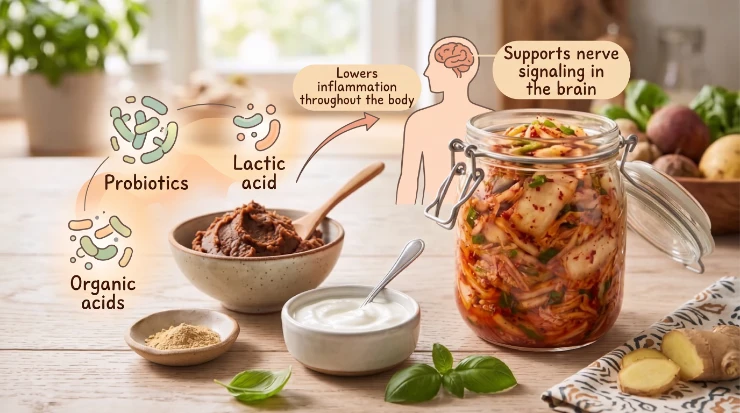
- Key nutrients: Probiotics, lactic acid, organic acids.
- Foods to try: Unsweetened drinkable yogurt, traditionally brewed miso, kimchi in moderation.
- How it works: The probiotics and fermentation byproducts in fermented foods help keep the cells lining your gut intact, lower the body-wide, low-grade inflammation that endotoxins trigger, and keep a healthy environment for neurotransmitter metabolism.
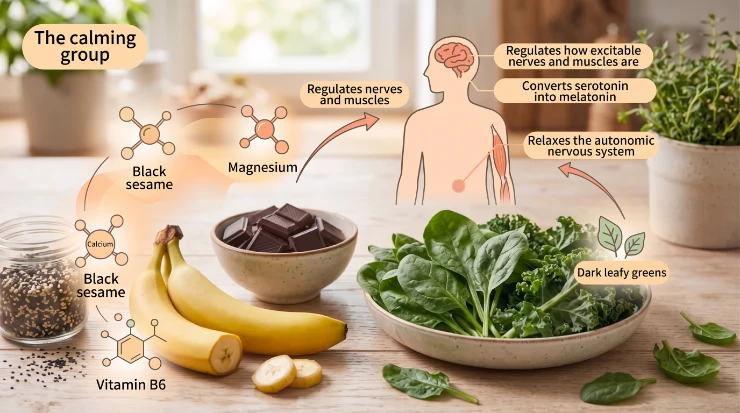
3. The calming group: minerals that regulate nerve and muscle tension
- Key nutrients: Magnesium, calcium, vitamin B6.
- Foods to try: Black sesame, bananas, dark chocolate (85% or higher), dark leafy greens.
- How it works: Magnesium is involved in hundreds of enzyme reactions in the body and helps regulate how excitable your nerves and muscles are. Keeping magnesium and calcium in the right balance helps your autonomic nervous system relax. Vitamin B6 helps the body convert serotonin into melatonin, supporting sleep quality during the body's nighttime repair.
Easy ways to eat when you're exhausted
When your body and mind are running on empty, making a complicated meal can feel like one more burden.
Here are some simple things you can do:
- At a convenience store: Get a bottle of warm unsweetened soy milk and a hard-boiled egg. Together they give you good-quality protein and tryptophan in almost no time.
- Add to your delivery order: Stick with the noodles or rice dish you usually get, and add a bowl of hot miso soup or a side of blanched greens. The fermented soup warms your stomach, and you get more fiber too.
- A warm drink when you have no appetite: When you don't feel like eating, don't force yourself to eat solid food. Try a cup of caffeine-free herbal tea instead. The volatile aromatic terpenes or flavonoids in it can help regulate your autonomic nervous system and slow down rapid breathing.
Your pace at the table: tuning in to your senses
Besides which foods you choose, the pace you eat at also affects your digestion and your nervous system.
When we're anxious, it's easy to eat fast while looking at a screen, so the stomach gets overly full before the brain has even received the signal that you've had enough. You can make a few small changes at the start of a meal:
- Slow down for the first three bites: You don't have to make every meal last twenty minutes. Just at the start of the meal, focus on the temperature, texture, and smell of the first three bites. This helps your autonomic nervous system shift from sympathetic to parasympathetic mode, which helps your digestive tract release digestive juices.
- Put the screen away before you eat: Before you start eating, take one minute to put your phone face down, to cut down on the stimulation that interferes with your autonomic nervous system.
Small tweaks to how you eat are part of everyday self-care. They don't have to become strict rules for living.
But honestly, eating slowly and properly really does make acid reflux less likely! (I can vouch for this one.)

But here's the thing
Body and mind are two sides of the same mirror. Every bite you take is quietly reshaping your gut and the chemical balance of your nervous system.
The point of changing how you eat isn't to hand your already exhausting life one more test. It's a gentle practice of reaching out to pull yourself up when the world feels unbearably heavy.
If today you really can't eat a single bite of healthy food, that's okay.
Pour yourself a glass of warm water, take a deep breath, close the curtains early, and get back into bed.
As long as you're willing to be a little more patient with yourself and take a little more care of yourself, the wheels of recovery are already quietly turning.
This letter offers general health education on nutrition for body and mind and on everyday self-care. If low mood, big changes in appetite, or trouble sleeping have lasted more than two weeks and are clearly affecting your daily life, please go to a hospital or clinic for a professional assessment and treatment by a psychiatrist, a clinical psychologist, and a clinical dietitian.
Written by
Vera Lin
Wujing Health · Mind-Body Awareness Guide · Founder · Clinical Dietitian (Taiwan)
Working on the front lines of health care, I saw how many people were struggling with binge eating, burnout, and anxiety, and how often a restless heart lay underneath. So I founded Wujing, bringing together evidence-based nutrition, mindful eating, and herbal care. I've walked alongside people through more than a thousand sessions, and I'd love to keep you company over a cup of tea and a few slow breaths, as you let go of the tension and find the courage to accept yourself again.
See all letters from Vera Lin