My Depression Is Still Here, but My Life Is More Than That
When depression lifts and then comes back, it doesn't mean you're back at square one. This letter is about why we're in such a hurry to get rid of it, why living with it isn't the same as giving up, and what changes when you stop asking "How do I make it go away?" and start asking "When it comes, what do I need?"


Contents · 5 sections
In this letter
 In this letter
- When depression comes back, it doesn't mean you're back at square one. You've just run into a version of yourself you've met before.
- Living with depression isn't giving up. It means not spending your whole life waiting for the day it leaves.
- Change the question from "How do I make it go away?" to "When it comes, what do I need?"
- You can be in the middle of depression and still have a life with small, real things in it.
— Maybe we don't have to ask ourselves every day, "When will I get better?"
Note: When this letter talks about "depression," it means the feelings of being low, drained, and down that people go through in their own lives. It isn't the same as a clinical diagnosis of depression.
What some of us fear most isn't the first time depression arrives. It's the night when you finally thought you were doing better, and that familiar feeling suddenly shows up again.
1. Why are we in such a hurry to get rid of depression?
After depression, a lot of us end up with an invisible KPI in our lives, and we keep checking ourselves against it:
"Am I any better today?"
"Why do I want to cry again?"
"Haven't I been working at this for so long already?"
"Why has it come back?"
So on top of a pain that's already hard enough, we pile on one more layer:
"Why am I still not better?"
2. Living with it isn't the same as giving up
For me, living with depression doesn't mean:
"This is just how I am."
"Then there's no point getting treatment."
"Depression is part of me. There's nothing I can do."
It's more like this:
I hope that one day it gets lighter. But until it leaves, I don't want to spend my whole life waiting for that day.
3. From "How do I make it go away?" to "When it comes, what do I need?"
For example, where I might once have asked:
"Why am I depressed again?"
I've slowly started asking:
"What's been going on lately?"
"Am I just worn out?"
"Is there a loss, or something I'm still working through, that I haven't dealt with yet?"
"Do I need someone with me right now, or time alone to rest?"
This shift matters. It turns depression from "an enemy that has to be destroyed" into a state that needs to be understood.
Sometimes, behind a low mood, there's exhaustion, loss, stress, or needs that have gone unseen for a long time. There won't always be a clear answer. But instead of rushing to blame ourselves, we can try asking one more question: "What am I going through right now?"
Talking to someone you trust or writing these feelings down, and really seeing what you need: that's a very grown-up kind of magic. Being able to let your feelings out freely is a real, everyday way of looking after yourself, too.
The real world may not be as lovely as a fairy tale, and we won't always be able to pull ourselves out of the dark right away. But maybe we can learn to be that small glimmer of light for ourselves. Not lighting up all of the darkness, but, when we can't see which way to go, at least seeing what we need in this moment.
4. Let your life hold depression and other things, too
Maybe you still feel really low today. But you might also have:
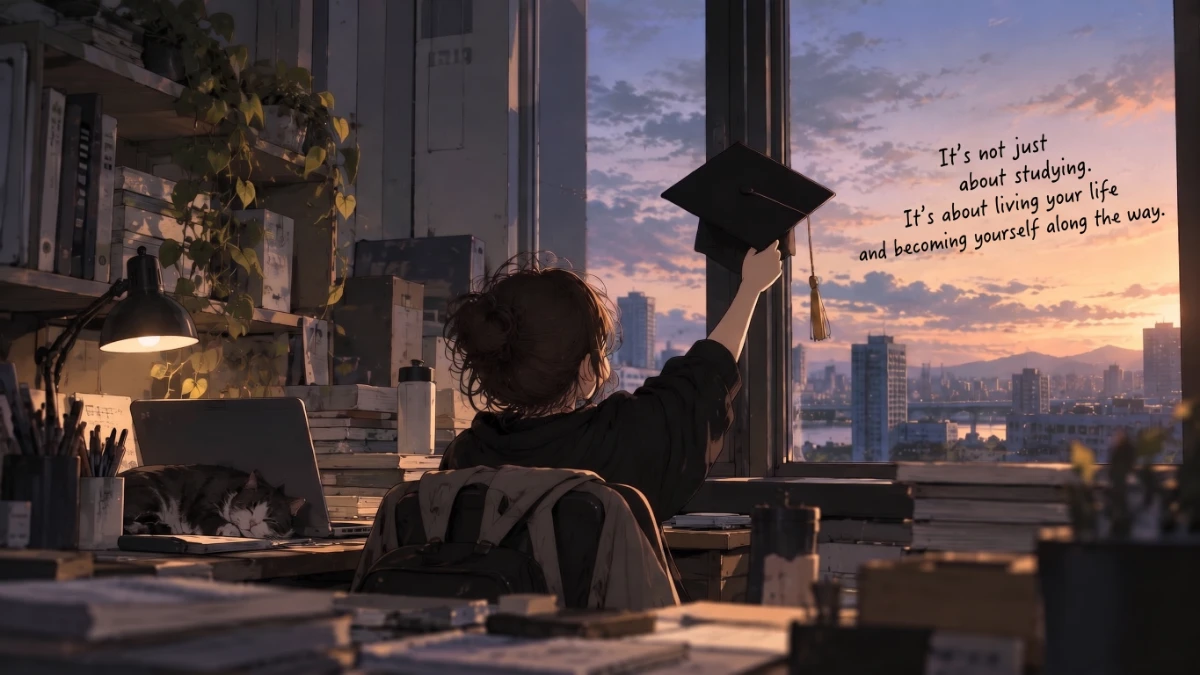
eaten a dinner you love, petted your cat for a minute, watched a really good episode of something, gotten one small task done, or laughed with a friend for ten minutes.
These small good things don't prove your pain isn't real. And the pain being there doesn't cancel out the good things, either.
You can be in the middle of depression and still have a life with small, real things in it.
5. The next time it comes back
Maybe one day it really will be far away from you.
Or maybe, in a tired stretch, after a loss, or in winter, it'll still come back now and then.
But slowly you'll come to know that when depression shows up, it doesn't mean you're back at square one.
You've just run into a version of yourself you've met before.
Maybe on the way here you've stumbled more than once, and there have been times when no one really understood you or was there to catch you. But look back for a moment: what got you all the way here?
Without even noticing, haven't you grown some strengths you didn't have before? Knowing when to rest. Knowing who you can turn to for help. Knowing that some feelings don't have to be fixed right away. And knowing that you've already made it through those really hard days, again and again.
We may not be able to go back and get the gentleness we missed out on.
But the next time that familiar self comes back, maybe we won't be in such a hurry to send it away.
Maybe we'll just leave a small light on and sit with it for a while.
Written by
Irene Chang
TownTown · Peace of Mind & Communication Mentor
Irene holds an M.S. in Thanatology from National Taipei University of Nursing and Health Sciences and a B.A. in History from the College of Humanities and Social Sciences at National Dong Hwa University. Having lived through deep personal trauma and night after night of sorrow, and having stood beside people sinking into emotional quicksand, Irene followed an inner calling and picked up the microphone, hoping that sharing this experience might light a small glow in other people's hearts. Irene's academic work focuses on depression. Irene has hosted more than 20 healing talks at universities and foundations, helping people living with depression, and the people who support them, find better ways to communicate and to cope with their emotions.
See all letters from Irene Chang